Almería: La Capital Europea de los Invernaderos — Y Por Qué Está Entrando en una Nueva Era Tecnológica
De la agricultura basada en la intuición a la gestión basada en datos: el futuro del campo almeriense pasa por la transformación digital.
6 min lecturaSi alguna vez has visto Almería desde el aire, entiendes perfectamente por qué se habla del *mar de plástico*. Miles de hectáreas de invernaderos que se extienden desde El Ejido hasta Níjar, formando uno de los sistemas agrícolas más productivos del mundo.
Durante décadas, esta tierra ha alimentado a Europa.
Pero quienes trabajamos dentro de estos invernaderos sabemos algo más. Almería no es solo un paisaje — es un sistema construido sobre precisión, presión y adaptación constante.
Y ahora, ese sistema está entrando en una nueva etapa.
Construido con esfuerzo, precisión y adaptación
Almería no llegó hasta aquí por casualidad. Se construyó poco a poco, gracias a familias que transformaron tierras áridas en explotaciones altamente productivas.
Poca agua, condiciones extremas y presión constante del mercado obligaron a una cosa por encima de todo: eficiencia.
Había que optimizarlo todo — riego, control biológico, ciclos de cultivo, logística. No como una estrategia, sino como una necesidad.
La eficiencia nunca fue opcional. Era supervivencia.
Pero el entorno que dio forma a este modelo ya no es el mismo.
Un nuevo nivel de presión
Hoy los retos ya no son solo agronómicos. Son estructurales.
La energía fluctúa, los costes laborales aumentan, las normativas son cada vez más exigentes y la competencia internacional es más fuerte. Mientras tanto, los márgenes se estrechan.
El precio de venta rara vez lo controla el agricultor.
Y eso deja un único campo de batalla: el control operativo.
La diferencia entre una buena campaña y una mala ya no está solo en producir más o menos. Está en cómo se gestiona la explotación, en la claridad sobre los costes y en la capacidad de ejecutar bien cada decisión.
La brecha operativa
Dentro de muchos invernaderos existe una desconexión.
La producción ha evolucionado. La gestión, en muchos casos, no.
Se utilizan sistemas avanzados de control biológico. Se monitoriza el clima con precisión. Se optimiza el riego al detalle. Pero detrás de todo eso, muchas explotaciones siguen funcionando con herramientas fragmentadas.
Mensajes de WhatsApp. Cuadernos en papel. Hojas de Excel poco estructuradas. Estimaciones en lugar de datos reales.
Esto funciona… hasta cierto punto.
Pero cuando la explotación crece, la complejidad aumenta. Más fincas, más trabajadores, más ciclos. Sin datos estructurados, las decisiones pasan a ser reactivas.
La experiencia es clave, pero sin estructura no escala.
Y hoy, aproximar ya no es suficiente.
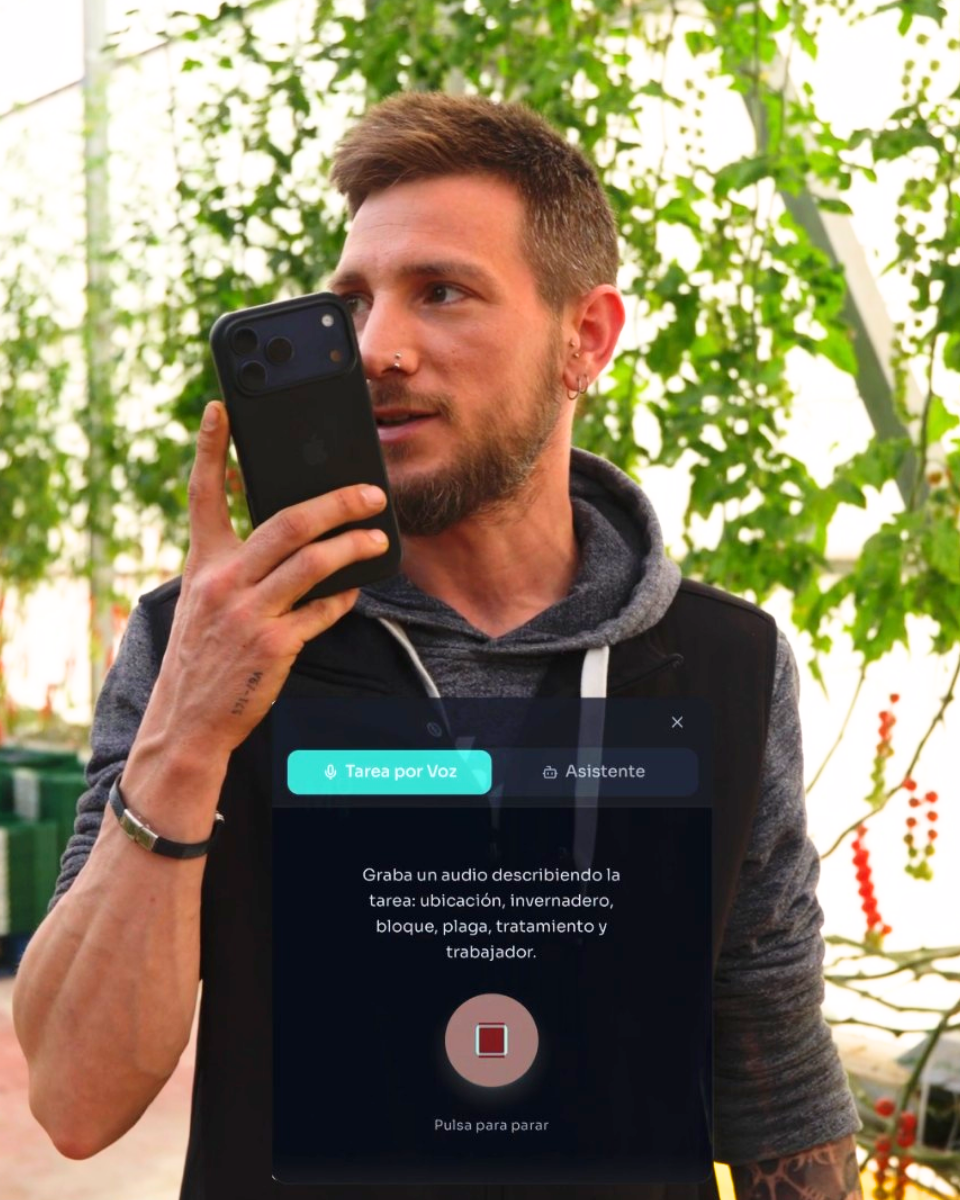
La nueva generación
El sector está cambiando desde dentro.
Una nueva generación de agricultores está entrando, muchos con formación en empresa, ingeniería o mercados internacionales. Entienden los márgenes, el rendimiento y la sostenibilidad a largo plazo.
Ya no ven la finca solo como tierra.
La ven como una operación.
Esto no sustituye la tradición. La refuerza. La experiencia sigue siendo fundamental, pero cuando se combina con información estructurada, se vuelve mucho más potente.
La tecnología como base, no como tendencia
Cuando se habla de tecnología en agricultura, muchas veces se piensa en inteligencia artificial o robots.
Pero la verdadera transformación empieza antes.
Antes de cualquier sistema avanzado, hace falta orden. Datos registrados. Procesos claros. Decisiones trazables.
La tecnología, en este contexto, no es una moda. Es estructura.
Permite tener visibilidad sobre lo que ocurre en la explotación: insumos, tareas, costes, rendimiento a lo largo del tiempo.
La claridad mejora las decisiones. Y las decisiones mejoran la estabilidad.
La próxima ventaja competitiva
Almería ya tiene algo que muchas regiones no tienen: conocimiento agronómico, una red exportadora sólida y décadas de experiencia acumulada.
La siguiente ventaja no vendrá de crecer en superficie.
Vendrá de ser más eficientes por metro cuadrado.
Reducir pérdidas invisibles. Optimizar la mano de obra. Entender la rentabilidad con detalle. Convertir el día a día en datos que se puedan analizar.
No se trata de cambiar lo que existe.
Se trata de protegerlo.
Un sistema que evoluciona
Desde fuera, el mar de plástico puede parecer algo estático.
Pero desde dentro, siempre ha estado en constante evolución.
Cada generación ha tenido que adaptarse a nuevas condiciones, nuevas exigencias y nuevas oportunidades. Lo que está pasando ahora es simplemente el siguiente paso.
Porque al final, la verdadera fuerza de Almería no está en los invernaderos.
Está en su capacidad de adaptarse.
Y eso es exactamente lo que está volviendo a ocurrir.